Cervical Spinal Stenosis Treatment in NJ & NY
Your hands have been clumsy for months. Buttons take twice as long, your handwriting has deteriorated, and you stumble on flat ground for no obvious reason. These are not signs of aging. They may be signs that your cervical spinal canal is narrowing around your spinal cord. Metro Pain Centers diagnoses cervical spinal stenosis and treats the compression before it progresses further.

Understanding Cervical Spinal Stenosis at Metro Pain Centers
Cervical spinal stenosis is the progressive narrowing of the spinal canal in the cervical region caused by degenerative changes including disc bulging, ligamentum flavum thickening, facet hypertrophy, and osteophyte formation, resulting in compression of the spinal cord or cervical nerve roots that can produce pain, sensory changes, and functional impairment in the upper and lower extremities.
Myelopathic gait changes, the characteristic unsteady and wide-based walking pattern that develops when cervical spinal stenosis compresses the spinal cord and disrupts the long motor tracts controlling leg coordination, represent the most clinically significant warning sign of advancing cervical myelopathy. Metro Pain Centers screens for myelopathic gait changes at every cervical stenosis evaluation because their presence indicates cord compression requiring urgent intervention.
The cervical spinal canal is narrower than the lumbar canal, which means even modest narrowing can compress the spinal cord. Unlike lumbar stenosis, which typically affects only nerve roots, cervical stenosis can damage the cord itself.
Metro Pain Centers evaluates cervical spinal stenosis with a dual focus on pain relief and cord protection. Our physicians determine whether the stenosis is producing radiculopathy, myelopathy, or both, because the treatment strategy differs for each presentation.
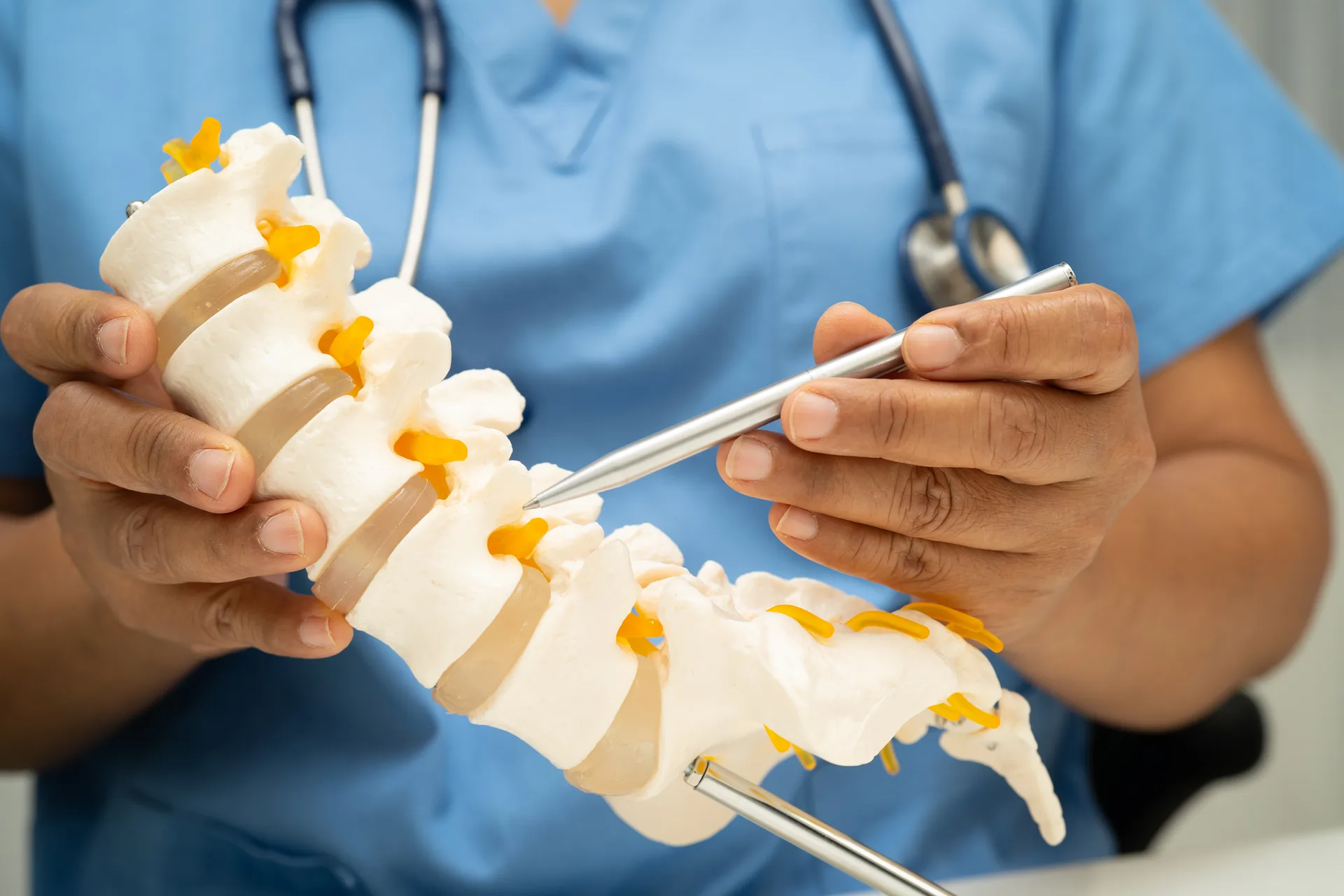
Understanding Your Condition
Our board-certified physicians use advanced diagnostic techniques to accurately identify the source of your pain, ensuring you receive the most effective treatment.
Symptoms of Cervical Spinal Stenosis
Neck pain with stiffness that worsens with extension is the earliest and most common symptom. Metro Pain Centers evaluates whether this pain originates from facet arthritis, disc degeneration, or neural compression within the narrowed canal.
Radiating arm pain, numbness, and tingling follow a dermatomal pattern when individual cervical nerve roots are compressed within the stenotic canal. Our physicians map these symptoms to the C5, C6, C7, or C8 nerve roots to identify the affected level.
Hand clumsiness and difficulty with fine motor tasks such as buttoning shirts, writing, or handling coins indicate cervical myelopathy from cord compression. Metro Pain Centers treats these myelopathic signs as high-priority findings requiring expedited evaluation.
Gait instability with a sensation of legs feeling heavy or unsteady, especially on uneven surfaces, develops when the cord's long motor tracts are compromised. Balance difficulty that worsens in the dark suggests proprioceptive loss from cervical cord compression.
What Causes Cervical Spinal Stenosis
Degenerative disc disease narrows the cervical canal as discs lose height and bulge posteriorly into the spinal space. Metro Pain Centers identifies disc-related narrowing as the most common contributing factor in patients over 50.
Facet joint hypertrophy and osteophyte formation encroach on the canal from the posterolateral direction. Combined with disc changes, these bony overgrowths create circumferential narrowing that compresses both the cord and the nerve roots. Our pain management team evaluates the degree of circumferential stenosis on axial MRI images.
Ligamentum flavum thickening is a degenerative change that narrows the canal from the posterior aspect. When the ligament buckles during neck extension, it compresses the spinal cord from behind. Metro Pain Centers assesses ligament thickness on sagittal MRI sequences.
Congenital canal narrowing predisposes some patients to symptomatic stenosis earlier in life. A canal diameter below 13 millimeters is considered congenitally narrow. Even minor degenerative changes in a congenitally narrow canal can produce significant cord compression.
How Metro Pain Centers Diagnoses Cervical Spinal Stenosis
Physical examination includes upper and lower extremity neurological testing, gait analysis, and provocative maneuvers including Lhermitte's sign and Hoffman's reflex. Our board-certified pain specialists use these clinical findings to determine whether stenosis is producing radiculopathy, myelopathy, or both.
Cervical MRI is the definitive imaging study. Metro Pain Centers evaluates the sagittal diameter of the spinal canal, the degree of cord compression, and any signal changes within the cord that indicate myelopathy. MRI also reveals which levels are most significantly narrowed.
CT myelography provides superior bony detail when MRI is inconclusive or contraindicated. Metro Pain Centers uses this study to evaluate osteophyte morphology and precise canal dimensions.
Electrodiagnostic studies including EMG and somatosensory evoked potentials assess the functional integrity of the spinal cord and nerve roots. Metro Pain Centers orders these studies when clinical findings suggest myelopathy but MRI changes are subtle.
Treatment Options for Cervical Spinal Stenosis at Metro Pain Centers
Cervical epidural steroid injections reduce inflammation around compressed nerve roots within the stenotic canal. Metro Pain Centers performs these using the interlaminar approach under fluoroscopic guidance with contrast confirmation to ensure safe medication delivery in the narrowed cervical space.
Cervical medial branch blocks and radiofrequency ablation target the facet-mediated component of cervical stenosis pain. Patients with confirmed facet pain from diagnostic blocks experience months of relief from this outpatient procedure.
Interventional pain management at Metro Pain Centers includes selective cervical nerve root blocks for radicular arm pain and spinal cord stimulation for chronic cervical pain that persists despite injection therapy.
Physical therapy emphasizes cervical stabilization, neural gliding techniques, and postural correction to maintain canal space and reduce mechanical stress. PRP therapy supports healing in degenerated cervical discs and facet joints. Medical marijuana may complement pain management for qualifying patients.
Schedule an appointment to discuss your cervical spinal stenosis treatment plan.
Your Cervical Spinal Stenosis Specialists at Metro Pain Centers

EXPERIENCE
Led by Dr. Rahul Sood
Led by Dr. Rahul Sood, Chairman of Anesthesiology at New Bridge Medical Centers, Metro Pain Centers provides multilingual care in English, Spanish, Punjabi, and Hindi across all 12 offices.
Our physicians hold board certifications in anesthesiology and pain medicine, with training from Mount Sinai, Rutgers, and Thomas Jefferson University.
Related Conditions Treated by Metro Pain Centers
Cervical spinal stenosis commonly coexists with other cervical spine conditions. Cervical herniated discs can worsen stenotic narrowing by adding disc material to an already compromised canal.
Radiculopathy is the nerve root compression that stenosis frequently produces. Neck pain and neck arthritis share degenerative causes with cervical stenosis.
View all conditions we treat at Metro Pain Centers.
Cervical Spinal Stenosis Treatment at 12 NJ and NY Locations
What is the difference between cervical stenosis and cervical myelopathy?
Cervical stenosis is the anatomical narrowing of the spinal canal. Myelopathy is the functional impairment of the spinal cord caused by that narrowing. Not all stenosis produces myelopathy. Metro Pain Centers evaluates both the structure and the function.
Can cervical spinal stenosis be reversed without surgery?
The bony narrowing cannot be reversed non-surgically. However, Metro Pain Centers effectively manages the pain and inflammation associated with cervical stenosis through epidural injections, nerve blocks, physical therapy, and neuromodulation.
How do I know if my cervical stenosis is getting worse?
Increasing hand clumsiness, gait instability, or new leg weakness suggest progression. Metro Pain Centers monitors patients with periodic MRI and neurological examinations to detect early changes.
Is cervical spinal stenosis dangerous?
Severe cervical stenosis with cord compression can cause permanent neurological damage if untreated. Metro Pain Centers identifies high-risk cases through clinical examination and MRI evaluation, and refers for surgical consultation when cord safety requires it.
Does insurance cover cervical stenosis treatment?
Metro Pain Centers accepts most major insurance plans. Our billing team verifies your coverage and explains costs before any procedure.
Hear From Our Patients
The doctors actually listen to you and take time to explain everything. I finally found relief after years of back pain.
From my first visit, I felt like they genuinely cared about helping me get better. The staff is wonderful and the treatments changed my life.
After seeing multiple doctors with no improvement, Metro Pain Centers finally gave me a treatment plan that works. I can't recommend them enough.
Get Relief from Cervical Spinal Stenosis Today
The hand clumsiness, neck pain, and gait changes are not normal aging. They are treatable symptoms of a narrowing cervical canal. Metro Pain Centers provides the cervical expertise and interventional precision to manage your stenosis and protect your spinal cord function.